

Let me explain why most entrepreneurs who are brilliant at what they do are quietly leaving a fortune on the table every single month. It is not because their product is inferior. It is not because the market does not want what they offer. It is because nobody taught them how to sell.
Think about it. You spent years mastering your craft, your service, your industry expertise. But the skill of converting a conversation into a client, of guiding someone from interest to commitment, that was never part of the curriculum. And so most entrepreneurs either wing it, avoid it, or hand it off the moment they can afford to. All three approaches cost them significantly.
I am Trip Saggu, your entrepreneurial coach in London with over two decades of entrepreneurial experience, including professional training in corporate selling and commercial strategy. What I know with absolute certainty, having coached hundreds of business owners across London and the wider UK, is this: selling is a learnable skill. Not a personality type, not a gift you are either born with or without. A skill. And like every skill, the right coaching strategies to increase sales make the difference between struggling and excelling.
This article gives you the framework I use with my own coaching clients to transform how they approach sales, from the mindset work that underpins everything through to the specific techniques that consistently result in more conversions, higher deal values, and a client base built on genuine trust rather than pressure tactics.
Are you ready to stop leaving deals on the table?
Why Most Entrepreneurs Struggle to Sell (And It Is Not What You Think)
Before we talk strategy, let us talk honestly about why sales feels so uncomfortable for so many talented entrepreneurs. Because if we do not address the root cause, no amount of technique will stick.
The most common reason entrepreneurs avoid or underperform in sales has nothing to do with skill and everything to do with identity. They see selling as something that conflicts with who they are: with their values, their professionalism, their integrity. Phrases like “I am not a salesperson” or “I do not want to come across as pushy” reveal a deeply ingrained belief that sales is inherently manipulative. And that belief, left unexamined, acts as a ceiling on every commercial conversation they will ever have.
73% of entrepreneurs cite fear of rejection as their primary barrier to proactive selling. That figure is not a commentary on capability. It is a commentary on mindset.
The second most common barrier is a lack of structure. Without a clear framework for how a sales conversation should flow, entrepreneurs improvise. Sometimes improvisation works. More often, it produces meandering conversations that never reach a decision, proposals that disappear into silence, and follow-ups that feel awkward and forced.
The third barrier is misaligned positioning. Many entrepreneurs try to sell their service before they have established sufficient context, trust, or urgency in the mind of the potential client. They lead with what they offer rather than with the problem they solve. They pitch before they diagnose. And the result is a conversation that feels transactional rather than consultative, and that rarely converts.
Great selling is not about persuasion. It is about helping the right person make a fully informed decision to solve a problem that is genuinely costing them. When you internalise that, selling stops feeling uncomfortable and starts feeling like a natural extension of your expertise.
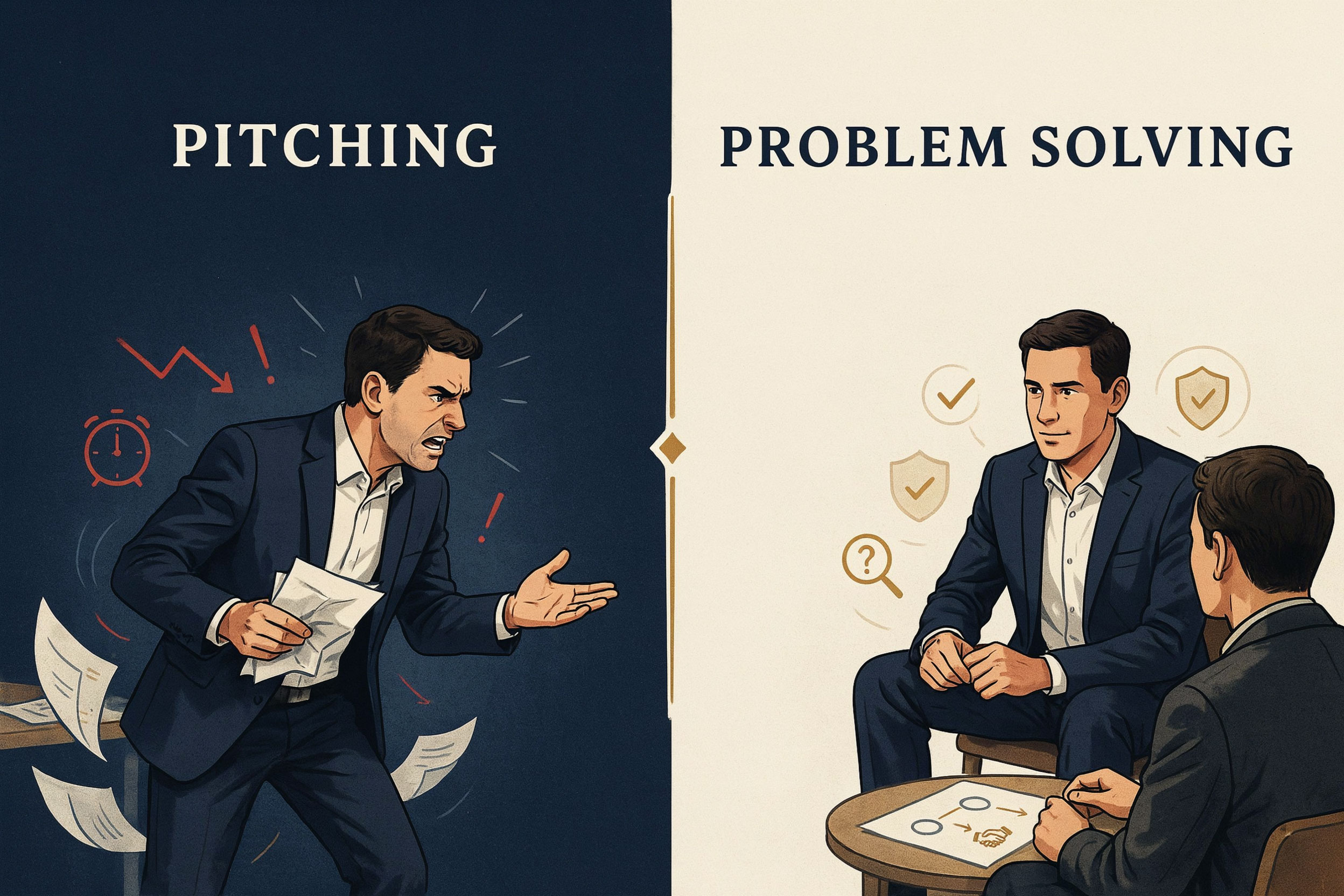
Strategy 1: Rewire Your Sales Mindset From Pitching to Problem-Solving
The single highest-leverage change any entrepreneur can make to their sales performance costs absolutely nothing and requires no new technique. It requires a complete shift in how they define what selling actually is.
Here is the reframe that changes everything: you are not trying to persuade someone to buy something. You are trying to help someone solve a problem they have already told you matters to them. This is not wordplay. It is a fundamental repositioning of your role in every sales conversation. The moment you step into the role of problem-solver rather than product-pitcher, the entire dynamic shifts. The potential client leans in rather than bracing for a close. They open up rather than stay guarded. And crucially, the best clients, the ones who stay, refer, and pay well, almost always make their own decision to move forward when the right conditions are created.
The Four Beliefs That Drive High-Performance Sales
In my coaching work, I help entrepreneurs develop four core beliefs that underpin every successful sales conversation:
- My offer creates genuine, measurable value. If you are not absolutely convinced that what you offer genuinely improves your clients’ situations, sales will always feel dishonest. Conviction is not arrogance: it is the foundation of authentic selling.
- Rejection is information, not failure. A “no” tells you something about fit, timing, or positioning. It is feedback, not judgement. Entrepreneurs who treat rejection as data improve faster and sell better than those who treat it as a personal verdict.
- My job is to qualify, not to convince. Not every prospect is the right client. The best sales frameworks are as focused on identifying poor fit early as they are on converting good fit. This mindset shift reduces wasted effort and dramatically improves close rates on the conversations that matter.
- Pricing reflects value, not cost. Undercharging is not humility: it is a confidence problem disguised as pricing strategy. High-performing entrepreneurs sell at rates that reflect the transformation they deliver, not the hours they work.
This mindset work is deeply connected to building the right entrepreneurial mindset. The same limiting beliefs that hold entrepreneurs back in leadership and decision-making almost always show up in their sales conversations too.
Strategy 2: Define Your Ideal Client With Surgical Precision
Here is a principle that will save you more time and generate more revenue than almost any sales technique you will ever learn: selling to the wrong person is more expensive than not selling at all. The wrong client drains your energy, compromises your results, generates poor referrals, and quietly erodes the confidence that fuels your best work.
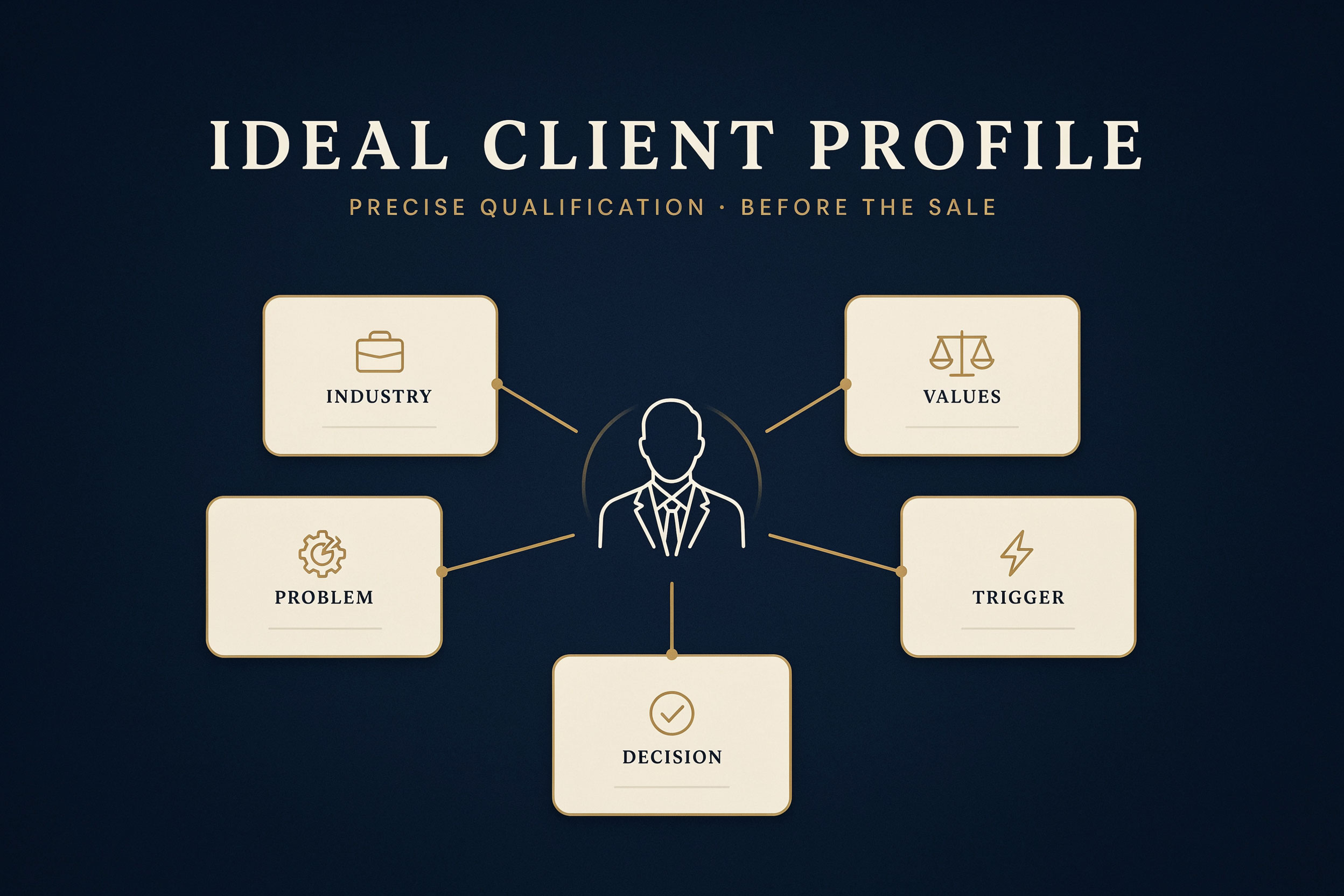
Defining your ideal client is not a marketing exercise: it is a sales efficiency exercise. The more precisely you can identify the characteristics of your best clients, their industry, their stage of growth, their specific challenges, their decision-making style, their readiness to invest, the more effectively you can qualify every conversation against that profile. And the more ruthlessly you qualify, the higher your conversion rate on the conversations that remain.
The Ideal Client Profile: Five Dimensions to Define
| Dimension | Questions to Answer | Why It Matters in Sales |
|---|---|---|
| Demographics | Industry, business size, revenue stage, geography | Helps you target outreach and immediately identify fit |
| Psychographics | Values, ambitions, attitude to investment, risk tolerance | Determines whether your approach and pricing will resonate |
| Problem Profile | The specific challenge they are experiencing, in their own language | Shapes your opening questions and your diagnostic framework |
| Trigger Events | What circumstance prompts them to seek help right now? | Identifies the moments of maximum buying readiness |
| Decision-Making | Who holds authority? What does their evaluation process look like? | Prevents late-stage surprises and helps you navigate the close |
Once you have this profile, every sales conversation begins with a filter rather than a pitch. You are not asking “how do I sell to this person?” You are asking: “Is this person someone I can genuinely help, and are they ready for that help right now?” That question changes everything about how you show up and what you say. My guide on defining clear entrepreneurial goals provides a strong complementary framework for aligning your client profile with your broader business direction.
Strategy 3: Master the Consultative Selling Framework
The most effective sales approach for professional entrepreneurs, particularly those selling high-value services, is not transactional selling. It is consultative selling: a structured approach that mirrors the diagnostic process of a trusted expert rather than the persuasion process of a traditional salesperson.
Consultative selling works because it is congruent with how your best clients want to be treated. They do not want to be sold to. They want to be understood, diagnosed, and given a clear path forward by someone whose expertise they trust. When your sales process delivers that experience consistently, conversion follows naturally, without pressure, without awkwardness, and without discount requests.
The Five-Stage Consultative Sales Conversation
Here is the framework I teach my coaching clients. Every high-converting sales conversation moves through these five stages in sequence:
| Stage | What Happens and Why |
|---|---|
| 1. Establish Context and Rapport | Open by creating genuine connection and establishing the purpose of the conversation. Ask how they found you, what prompted them to reach out, and what they are hoping to understand from the conversation. |
| 2. Diagnose Before You Prescribe | This is the stage most entrepreneurs skip and it is the most important one. Ask deep, open questions about the prospect’s current situation, the specific challenges they are facing, how long those challenges have been present, and what the cost of those challenges has been. Listen far more than you speak. |
| 3. Quantify the Problem | Help the prospect articulate the real cost, financial, emotional, and operational, of the problem they have described. Many prospects have never stopped to calculate what their challenge is actually costing them. When they do, the investment required to solve it looks very different. |
| 4. Present a Tailored Solution | Only now do you present your offer, and you frame it specifically in terms of the challenges they have described, the outcomes they want, and the costs of inaction. You are not presenting a brochure. You are presenting a diagnosis and a treatment plan. |
| 5. Navigate to a Decision | Close with clarity, not pressure. Ask directly: “Based on what we have discussed, does this feel like the right direction for you?” Then be comfortable with silence. The entrepreneurs who learn to sit in the pause without rushing to fill it with discounts consistently convert at higher rates. |
The best sales conversations feel nothing like sales. They feel like the beginning of a working relationship, because that is exactly what they are, when done correctly.

Strategy 4: Position Your Offer Around Outcomes, Not Deliverables
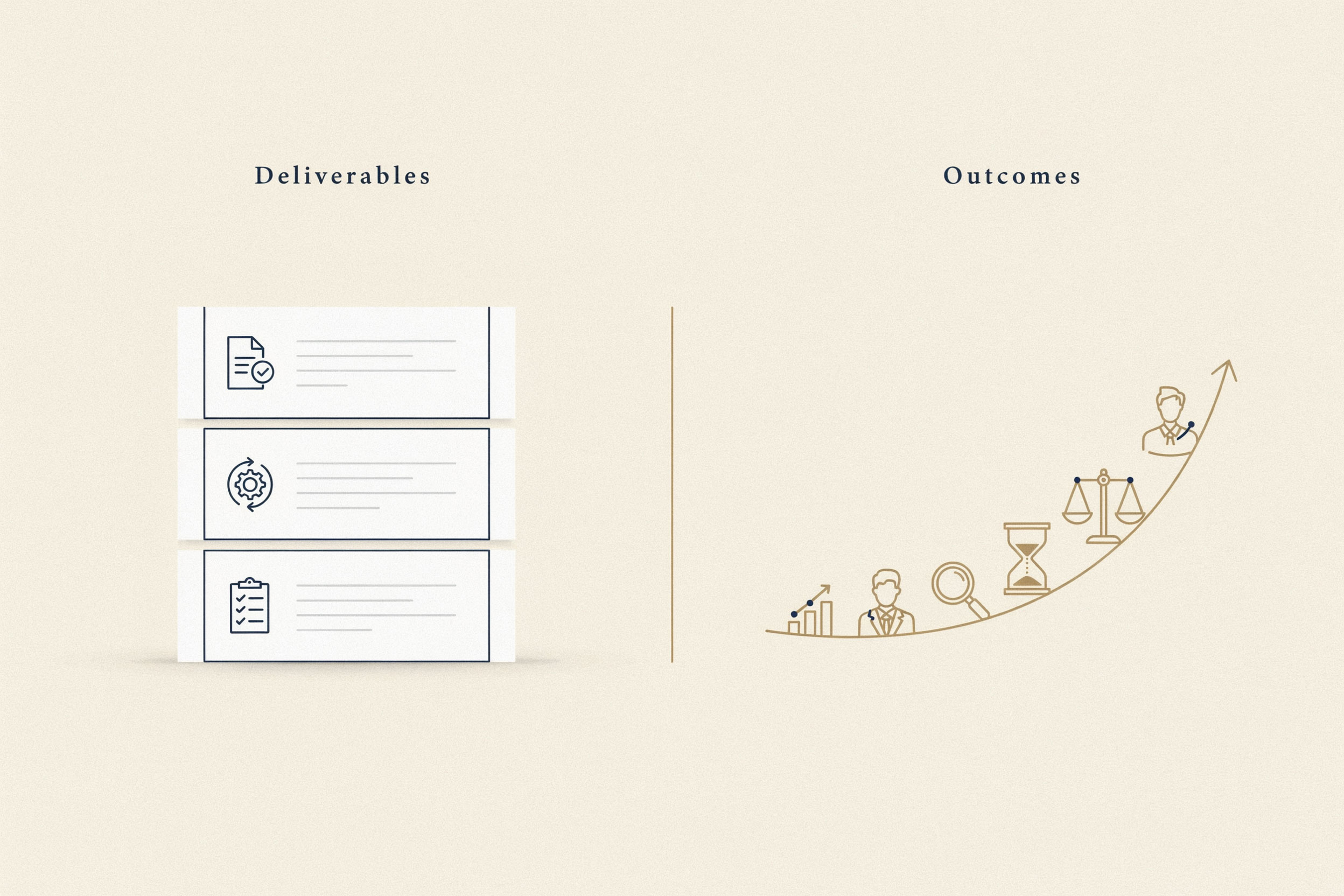
One of the most consistent and costly mistakes I see entrepreneurs make in sales is describing what they do rather than what their clients get. They lead with process: the sessions, the framework, the deliverables, the methodology. And while all of that matters, it is not what your prospect is buying.
Your prospect is buying a future state. They are buying the version of their business, or their career, or their life, that exists on the other side of working with you. They are buying the relief, the growth, the clarity, the confidence, the revenue increase, the time reclaimed. Sell the destination, not the vehicle. The more vividly and specifically you can describe the transformation your clients experience, the more compelling your offer becomes and the less price sensitivity you will encounter.
Translating Features Into Outcomes: A Practical Framework
| What You Offer (Feature) | What Your Client Gets (Outcome) |
|---|---|
| Bi-weekly coaching sessions | A consistent structure that keeps your priorities clear and your momentum high, even during the weeks when everything feels chaotic |
| A personalised business strategy | A specific, actionable roadmap so you stop second-guessing every decision and start moving with genuine direction and confidence |
| Accountability check-ins | The external pressure that closes the gap between what you know you should do and what you actually do, consistently |
| Access to proven frameworks | Tools that compress years of trial and error into a clear path forward, so you make better decisions faster |
| NLP and mindset techniques | The ability to perform at your highest level under pressure, rather than being derailed by self-doubt or fear at critical moments |
This exercise sounds simple. In practice, it requires real depth of understanding of your client’s world. When you know precisely what your client is trying to achieve, you can position your offer as the most direct path to get there.
Strategy 5: Build a Sales Pipeline That Works When You Are Not
Most entrepreneurs treat sales as something that happens in bursts: intensive periods of outreach and conversion followed by long stretches of pure delivery, until the pipeline runs dry and the cycle repeats. This feast-and-famine pattern is not just commercially unstable. It is one of the fastest routes to the kind of chronic stress and overwhelm that my guide on entrepreneur burnout prevention addresses in detail, and one of the clearest signs that your sales activity needs structure, not just effort.
A properly structured sales pipeline changes this entirely. It creates a consistent, predictable flow of qualified conversations so that you are never either drowning in enquiries or desperately chasing your next client. Predictability in sales is one of the most underrated drivers of business confidence and strategic decision-making.
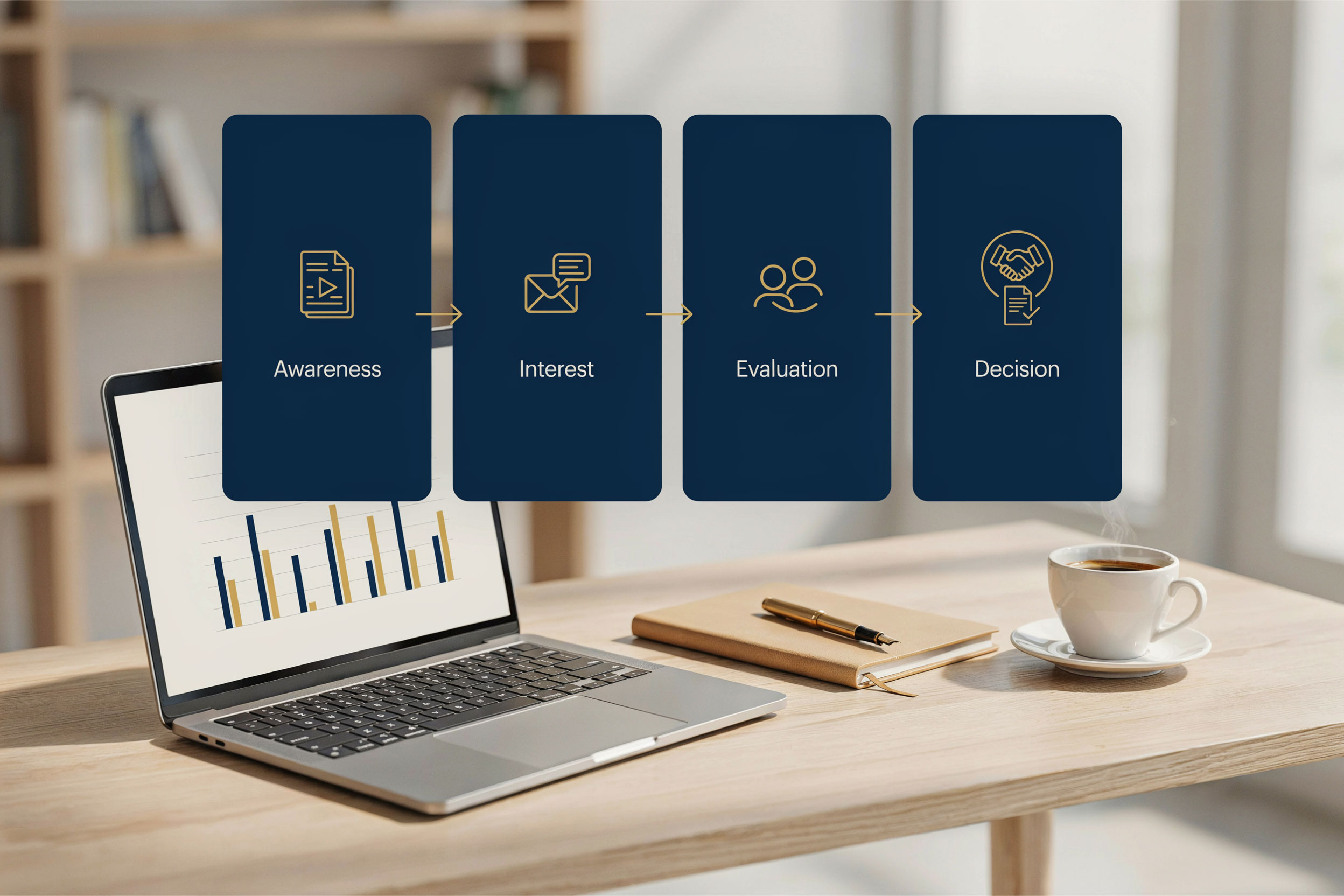
The Four Stages of a Healthy Entrepreneur Sales Pipeline
- Awareness: The stage where potential clients first encounter you through your content, your presence at events, referrals from existing clients, or your personal brand. Activity: consistent content, speaking, attending the right networking events for entrepreneurs in London, and maintaining a strong referral culture.
- Interest: The stage where a potential client moves from passive awareness to active engagement, following you, responding to your content, or reaching out directly. Activity: direct outreach, compelling calls to action in your content, and making it easy for people to take the next step.
- Evaluation: The stage where you are in active conversation with a qualified prospect, typically a discovery call or strategy session. Activity: the consultative selling framework, tailored solution presentation, and a clear follow-up rhythm.
- Decision: The stage where a prospect makes a commitment, or does not. Activity: removing friction from the commitment process, clear and compelling proposals, and confident closing language.
The Follow-Up System Most Entrepreneurs Neglect
Research consistently shows that 80% of sales require between five and twelve touchpoints before a decision is made, yet the vast majority of entrepreneurs follow up once or twice and then stop, assuming a lack of response signals disinterest. It rarely does. It usually signals timing, competing priorities, or simply the demands of a busy schedule.
Build a structured follow-up sequence for every prospect who does not convert immediately. Every follow-up should give before it asks: a relevant article, a case study, a connection from your network, or a specific insight related to their challenge. This approach keeps you visible, demonstrates your thinking, and positions you as someone worth saying yes to when the timing is right.
The fortune is in the follow-up. Not because persistence wears people down, but because consistent, valuable presence builds the trust that eventually converts into commitment.
Strategy 6: Protect Your Highest-Value Sales Time
Here is a question worth sitting with: when are you at your sharpest? When does your energy peak? When are you most articulate, most confident, most creative in your thinking? For most people, that window is in the morning, the first two to three hours of the working day, before the demands and distractions of operational life begin to accumulate.
Now here is the uncomfortable follow-up question: is that when you are doing your sales activity? Or is that when you are clearing emails, attending operational meetings, and dealing with the endless administrative demands of running a business?
Selling deserves your best hours, not your leftovers. I say this as someone who has made this mistake personally: deferring sales conversations and outreach to the end of a draining day, then wondering why my energy and conviction in those conversations did not match the quality I knew I was capable of.
If mastering time management as an entrepreneur is something you are actively working on, protecting dedicated daily time for sales activity is one of the highest-leverage commitments you can make. Block it in your calendar. Treat it with the same non-negotiable commitment you give to client delivery. Because without new clients, there is no delivery to protect.
Strategy 7: Turn Every Client Into a Sales Asset
The most efficient sales channel available to any entrepreneur is also the most consistently underutilised: referrals from satisfied clients. A referred prospect arrives with pre-established trust, reduced price sensitivity, and a shorter decision timeline. They close faster, they stay longer, and they refer others in turn. A referral-driven pipeline is not just more efficient than cold outreach: it is qualitatively different in every commercial metric that matters.
So why do most entrepreneurs not have a systematic approach to generating referrals? Because they treat referrals as something that either happens organically or does not, rather than as a deliberately designed outcome of an exceptional client experience combined with a clear, comfortable referral process. This is also where your personal brand as an entrepreneur intersects powerfully with sales: when your reputation precedes you, referrals arrive pre-warmed and ready to convert.
Building a Referral Engine Into Your Business
- Deliver results worth talking about. This is the foundation everything else rests on. Clients refer when they are genuinely delighted, when outcomes exceeded their expectations and the experience of working with you was remarkable in itself. There is no referral system that compensates for mediocre delivery.
- Ask at the right moment. The best time to ask for a referral is immediately after a client has shared a positive outcome or expressed genuine appreciation. That moment of enthusiasm is when they are most naturally motivated to recommend you. Do not wait for a formal review: ask in the moment, simply and directly.
- Make it easy to refer you. Give your clients the language to use when they introduce you to someone. A brief, clear articulation of who you help and what changes for them as a result removes the friction that stops well-intentioned clients from following through.
- Acknowledge and reciprocate. When a client refers someone to you, acknowledge it warmly and reciprocate wherever you can, whether with a thoughtful thank-you, a relevant introduction from your own network, or by letting them know the outcome of the referral conversation. Referrals beget referrals when the culture around them is one of genuine generosity.

How Entrepreneur Sales Coaching Transforms Your Commercial Performance
Let me be transparent about something. Everything in this article, the mindset shifts, the frameworks, the pipeline structures, the referral systems, is significantly easier to implement with structured support than without it. Not because the concepts are complex, but because applying them in the context of your own business, under the pressure of real commercial targets, while managing every other dimension of entrepreneurship, is genuinely difficult.
This is precisely where working with an experienced entrepreneur coach makes a measurable and often transformational difference. In a sales coaching context specifically, an experienced coach helps you:
- Identify the specific mindset blocks that are showing up in your sales conversations, the beliefs, the fears, and the stories that cause you to undercharge, under-close, or avoid proactive selling altogether.
- Develop and rehearse your sales framework until it feels completely natural and genuinely yours, not a script you are following, but a structured conversation that reflects your authentic approach.
- Review real sales conversations and identify exactly where the energy or momentum shifted, what question was not asked, what signal was missed, what assumption closed the conversation prematurely.
- Build the accountability structure that keeps your pipeline consistently active, not in bursts when panic sets in, but as a steady, sustainable part of your weekly rhythm.
- Develop your pricing confidence so that you present your investment with the certainty and conviction it deserves, without hesitation, apology, or reflexive discounting the moment you sense any resistance.
If you are wondering whether now is the right moment to invest in that support, my guide on how to choose the right entrepreneur coach in London will help you evaluate your options with clarity, including what to look for, what questions to ask, and how to assess genuine fit before you commit. And if you are uncertain about the value of coaching investment, the real cost of DIY entrepreneurship without a coach examines this question honestly and in full.
Frequently Asked Questions About Sales Coaching for Entrepreneurs
How quickly can coaching strategies improve my sales results?
In my experience, entrepreneurs who commit seriously to the mindset work and begin implementing the consultative selling framework consistently typically see measurable improvements in conversion rates within four to eight weeks. Meaningful revenue impact usually becomes visible within two to three months of consistent application. The speed of improvement is directly related to the frequency and quality of sales conversations: the more deliberate practice, the faster the compounding effect.
I am an introvert. Can these sales strategies still work for me?
Absolutely, and in some respects, introverts have a genuine natural advantage in consultative selling. The approach described in this article is built on deep listening, thoughtful questioning, and genuine diagnosis rather than charismatic persuasion. These are qualities introverted entrepreneurs often possess in abundance. The mindset work around visibility and initiating conversations is worth addressing directly, but the selling framework itself is highly compatible with introvert strengths.
What is the biggest sales mistake entrepreneurs make?
Without question: presenting a solution before fully understanding the problem. It is the single most consistent conversion killer I observe across every industry. Entrepreneurs are naturally solution-oriented. When they hear a problem that matches their offering, the instinct is to immediately describe what they can do. Resisting that instinct, staying in the diagnostic phase longer, and asking deeper questions before presenting anything consistently produces higher-quality conversations and better conversion rates.
Should I discount my prices to close more deals?
Almost never, and certainly not reflexively. Discounting as a first response to price resistance teaches prospects to negotiate, attracts the wrong clients, devalues your expertise in your own mind as much as theirs, and compresses the margins you need to deliver excellent work. When you encounter price resistance, the almost always more effective response is to go deeper on value: revisit the cost of the problem, the specificity of the transformation, and the consequences of inaction, rather than reduce your price.
How do I handle objections without feeling pushy?
The reframe that resolves this tension entirely is understanding that an objection is not a rejection: it is a request for more information or reassurance. “I need to think about it” usually means “I have an unanswered question I have not voiced.” “It is too expensive” usually means “I have not yet clearly understood the value relative to the cost.” Your job with an objection is to get genuinely curious about what is underneath it, not to counter-argue or push harder, but to ask a follow-up question that surfaces the real concern.
How do I maintain sales activity without it consuming my entire week?
Consistency over intensity. Block a focused, protected period for sales activity each day, 60 to 90 minutes at your peak energy time is sufficient for most entrepreneurs when applied consistently. Within that block: outreach or follow-up to existing pipeline, one or two focused prospect conversations if scheduled, and content that generates inbound awareness. The trap is either doing too little too sporadically, or letting sales activity expand to fill your entire schedule at the expense of delivery. Structure prevents both.
What is the difference between selling and manipulating?
This is the question that sits underneath most entrepreneurs’ discomfort with sales, and it deserves a direct answer. Manipulation involves creating a false impression to produce a decision someone would not make with full information. Selling, done well, does precisely the opposite: it helps someone understand their situation more clearly, quantify their problem more accurately, and evaluate a solution more completely than they could alone. If what you offer genuinely helps people, guiding them clearly towards a decision is an act of service, not manipulation.
Your Seven Coaching Strategies to Increase Sales: Key Takeaways
Sales is not the part of entrepreneurship you endure so you can get back to the work you love. Sales is work you love, once you approach it with the right mindset, the right framework, and the right systems. When you sell with genuine curiosity about your client’s world, deep conviction in the value you create, and a structured approach that makes every conversation productive, selling transforms from your most avoided activity into your most empowering one.
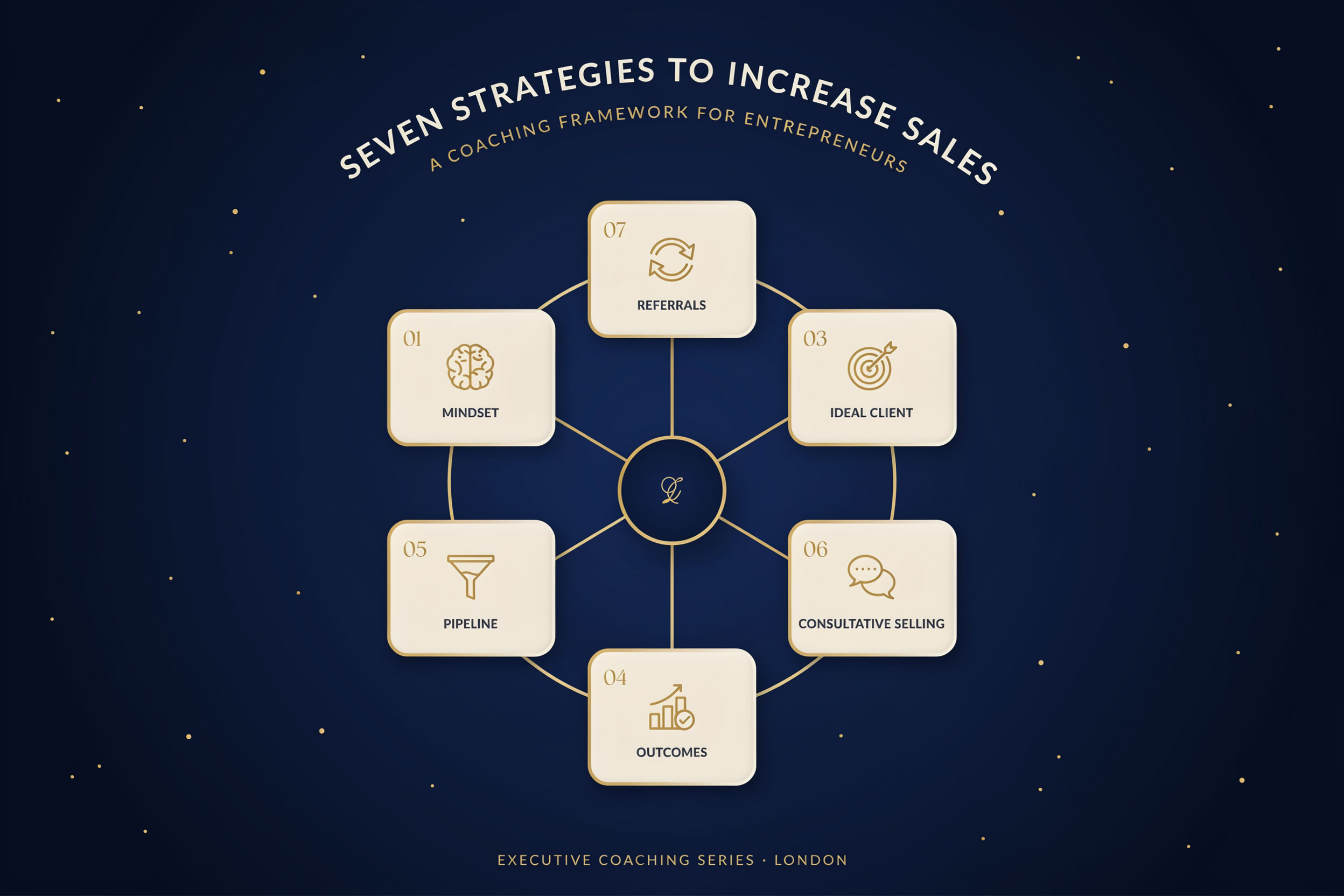
Here are the seven coaching strategies to increase sales in brief:
- Rewire your mindset: Shift from pitching to problem-solving. Conviction and curiosity are your foundation.
- Define your ideal client: Precision in qualification creates efficiency and confidence in every conversation.
- Master consultative selling: Diagnose before you prescribe. Understand the problem fully before presenting the solution.
- Position on outcomes: Sell the transformation, not the process. Your client is buying a future state.
- Build a consistent pipeline: Structure replaces panic. A healthy pipeline means you are always selling from a position of strength.
- Protect your sales time: Give your highest-value commercial activity your best energy, not your leftovers.
- Build your referral engine: Exceptional delivery plus a clear, comfortable referral process creates your most efficient sales channel.
If you are ready to stop leaving deals on the table and start building the kind of sales confidence and consistency your business deserves, I would very much like to work with you on it.
Ready to Close More Deals and Grow Your Revenue?
If you are serious about implementing these coaching strategies to increase sales and want expert, structured support to get there faster, I am here to help.
As London’s leading business coach for entrepreneurs, I have helped hundreds of business owners transform their relationship with sales, from reluctant and inconsistent to confident and systematic. Whether you need help with your sales mindset, your framework, your pipeline, or your pricing confidence, we can build the right plan together.
Book your complimentary sales strategy session with Trip Saggu today.
Together, we will identify exactly where your sales process is losing deals and create a clear, practical roadmap to close more of the right clients, at the right fees, without compromising who you are.
Your expertise deserves to be compensated. Let us make sure it is.