

Quick Legal Summary: What You Must Do Before Firing Anyone in the UK
Before dismissing any employee, you must: (1) Have fair grounds under UK law; (2) Document all performance issues and support provided; (3) Follow your disciplinary procedure or ACAS Code; (4) Provide appropriate warnings; (5) Hold a formal meeting with accompaniment rights; (6) Allow appeal rights; (7) Give proper notice. Skipping any step can result in unfair dismissal claims costing £ 20,000- £ 50,000+ in tribunal awards and legal fees.
Let me explain something that keeps business owners awake at night: the fear of getting employment law wrong when dismissing someone.
I’ve worked with countless entrepreneurs over my two decades in business, and this fear paralyses many of them into keeping underperforming employees far longer than they should.
But here’s the truth: understanding your legal rights and obligations actually empowers you to act with confidence, not fear.
Did you know that only 8% of employment tribunal claims result in a full hearing? The vast majority are either withdrawn, settled, or dismissed because employers followed proper procedure. When you know the law and follow it meticulously, you’re protected.
I’m Trip Saggu, your
business coach from London, and today I’m going to demystify UK employment law around dismissal completely.
Are you currently worried about the legal implications of firing someone? Let’s eliminate that anxiety with knowledge.
Understanding UK Employment Law: Your Legal Foundation
Before we dive into the specific steps, let’s establish the legal framework that governs all employment dismissals in the UK.
This isn’t about becoming a lawyer – it’s about understanding the rules of the game so you can play it confidently and win.

The Legal Rights Employees Have (And When They Get Them)
Employment rights in the UK are tiered based on length of service:
From Day One, all employees have the right to:
- Not to be discriminated against (Equality Act 2010)
- Statutory minimum notice periods
- Written statement of employment particulars within 2 months
- Protection from automatic unfair dismissal (whistleblowing, pregnancy, health and safety)
- National Minimum Wage and Working Time Regulations
- Protection from unlawful deductions from wages
After 2 years’ continuous service, employees gain:
- Full unfair dismissal protection rights
- Right to claim ordinary unfair dismissal at the employment tribunal
- Statutory redundancy pay entitlement (if applicable)
- Right to request flexible working
This is crucial to understand: An employee with 18 months’ service has far fewer legal grounds to challenge dismissal than one with 3 years’ service. However, discrimination claims can be brought from day one with no service requirement and no compensation cap.
Let me share something I’ve observed repeatedly: business owners often assume that because someone has been with them for less than two years, they can dismiss them without much process. That’s dangerous thinking. While ordinary unfair dismissal claims require two years’ service, discrimination claims don’t – and discrimination awards are uncapped.
The Five Fair Reasons for Dismissal in UK Law
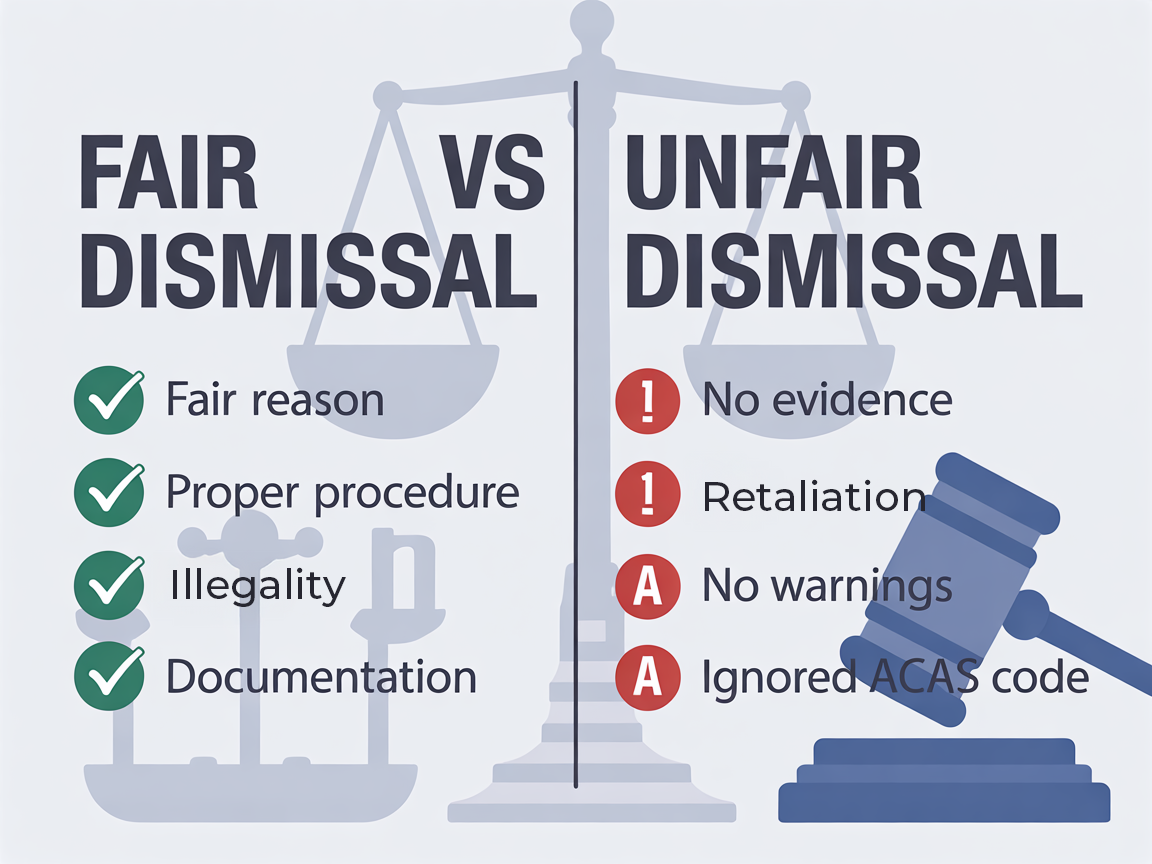
According to
UK Government employment legislation, you can legally dismiss an employee for only five reasons:
- Capability or Qualifications
The employee cannot perform their job to the required standard, either through:
- Lack of skill, aptitude, or competence
- Physical or mental health issues affecting performance
- Lack of necessary qualifications that were initially claimed
- Conduct
Behavioural issues or misconduct, ranging from:
- Minor misconduct (persistent lateness, poor attitude)
- Serious misconduct (breach of company rules, insubordination)
- Gross misconduct (theft, violence, fraud, serious safety breaches)
- Redundancy
The role is no longer required because:
- The business is closing or relocating
- Fewer employees are needed for specific work
- The work has diminished or ceased entirely
- Statutory Restriction
The employee can no longer legally continue in their role:
- Lost an essential professional licence or certification
- Lost the right to work in the UK (visa expiry)
- Driving ban for a role requiring driving
- Some Other Substantial Reason (SOSR)
Other legitimate business reasons, such as:
- Irretrievable breakdown in working relationships affecting business
- Refusal to accept reasonable contractual changes
- Third-party pressure (e.g., key client refusing to work with the employee)
If your reason doesn’t fit into one of these five categories, the dismissal will be unfair – regardless of how proper your process is.
What Makes a Dismissal “Unfair” in UK Law
A dismissal becomes unfair when:
- The reason falls outside the five fair reasons
- You failed to follow a fair and reasonable procedure
- The decision was unreasonable (no reasonable employer would have dismissed)
- The real reason was different from the stated reason
- It breaches the employee’s contract without justification
Following proper procedure is absolutely critical. Even if you have legitimate performance grounds, procedural failures can make the dismissal unfair and expose you to tribunal claims.
I’ve seen business owners with completely justified reasons for dismissal lose tribunal cases simply because they didn’t document conversations properly or failed to provide adequate warnings. Don’t let that be you.
The Essential Legal Process: 6 Mandatory Steps Before Firing Anyone
Right, let’s get into the practical steps you must take before dismissing any employee. This is your legal roadmap to protection.
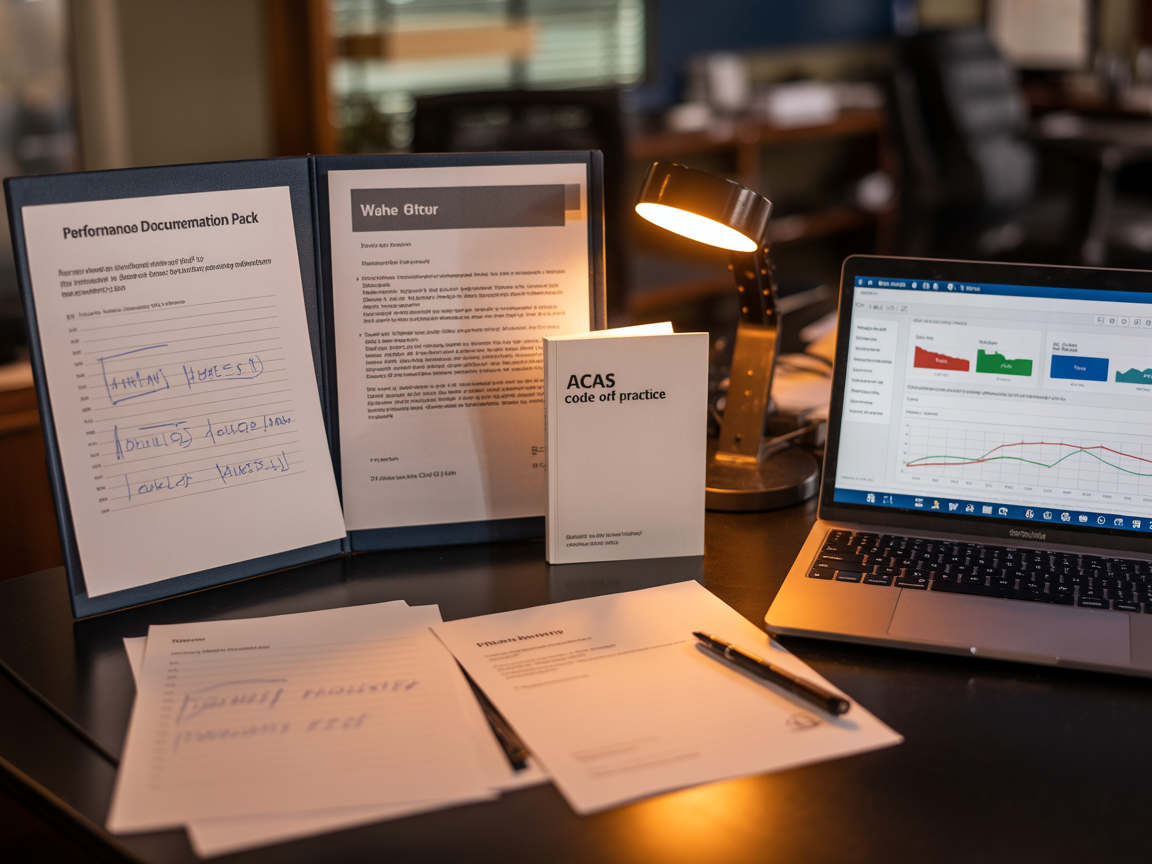
Step 1: Document Everything From the Very Beginning
Documentation is your legal shield. Without it, a tribunal becomes your word against theirs – and you’ll likely lose.
I can’t stress this enough: if it’s not written down, it didn’t happen in the eyes of an employment tribunal.
What you must document:
Performance Conversations (Every Single One)
- Date, time, and location of meeting
- Who was present at the conversation
- Specific performance issues discussed with concrete examples
- Evidence of the problems (metrics, client feedback, missed deadlines)
- Clear expectations communicated
- Employee’s response, explanation, or any mitigating factors
- Agreed actions, timelines, and support to be provided
- Follow-up date scheduled for review
Pro tip from experience: Send a follow-up email after every performance conversation summarising what was discussed. This creates contemporaneous written evidence that’s incredibly powerful in tribunals. It doesn’t need to be formal – something like:
“Following our conversation today, I wanted to confirm what we discussed regarding [specific issues]. We agreed you would [actions] by [date], and I’ll provide [support]. We’ll review progress on [date].”
Written Warnings (Formal Documentation)
- Detailed description of specific performance shortfalls
- Reference to previous conversations and support already provided
- Clear, measurable improvement targets with objective criteria
- Realistic timeline for required improvement
- Consequences are explicitly stated if improvement doesn’t occur
- Right to appeal the warning with a timeframe and process
- Signatures and dates from both parties
Support and Resources Provided
- Training sessions attended (with dates, content, and provider)
- Resources, tools, or equipment provided
- Coaching or mentoring arrangements established
- Additional support offered and employee’s response
- Budget allocated to their development
- Access to HR support or external assistance
Performance Metrics and Evidence
- Objective data showing performance gaps against targets
- Comparison to role requirements, KPIs, and job description
- Examples of specific failures, errors, or quality issues
- Customer complaints or negative feedback (anonymised if needed)
- Project delays or missed deadlines with business impact
- Comparison to peers’ performance (if relevant and appropriate)
According to
ACAS research, tribunals rule in favour of employers in 75% of cases where comprehensive documentation exists, compared to only 40% where documentation is sparse or absent.
Let me share a real example: A client of mine faced a tribunal claim from a dismissed sales manager. Because we’d worked together through
business coaching on implementing proper performance management, they had:
- 12 months of documented weekly one-to-ones
- Three written warnings with specific, measurable targets
- Evidence of £8,000 invested in sales training and development
- Performance data showing consistent failure to hit targets over 15 months
- A comprehensive 90-day Performance Improvement Plan with weekly reviews
- Emails showing the employee acknowledged the support provided
The case was settled within 48 hours for
£2,000. Without that meticulous documentation, it could have cost £35,000+ in tribunal awards and legal
fees.
This level of preparation doesn’t happen by
accident. Many business owners who struggle with people management decisions discover that their challenges
extend beyond just HR procedures – they’re often symptoms of broader leadership and operational gaps. As I
explore in my guide on why most small
businesses fail,
poor people management is consistently one of the top five reasons businesses don’t survive their first five years.
Developing robust HR systems isn’t just about legal protection – it’s about building a scalable, sustainable
business foundation.
Step 2: Follow Your Disciplinary Procedure Precisely (Or the ACAS Code)
Your employment contracts should reference a disciplinary and capability procedure. If you haven’t got one, you’re already exposing yourself to unnecessary risk.
If you don’t have a formal procedure, you must follow the
ACAS Code of Practice on Disciplinary and Grievance Procedures. This is a statutory code, and failure to follow it can increase tribunal awards by up to 25% – that’s potentially thousands of pounds added to any compensation.
The ACAS Code requires:
✓ Establish the facts thoroughly before taking formal action
✓ Inform the employee of the problem in writing with sufficient detail
✓ Hold a meeting to discuss the issue with reasonable notice
✓ Allow the employee to be accompanied at all formal meetings
✓ Decide on appropriate action based on all the evidence gathered
✓ Provide the right to appeal any formal decision
Your disciplinary procedure should clearly outline:
- What constitutes different levels of performance or conduct issues
- The stages of warnings (informal discussion, first written, final written)
- Realistic timelines for improvement at each stage
- Who has the authority to issue warnings at each level
- Who has the authority to dismiss
- Appeal procedures and who hears appeals (ideally someone not involved in the original decision)
Consistency is absolutely crucial here. If your procedure says you’ll hold three review meetings before dismissal, you must hold three meetings. If you state warnings last for 12 months, you can’t dismiss someone for something that happened 18 months ago without a current warning.
Deviating from your own documented procedure is handing employment lawyers a winning case on a silver platter. Don’t do it.
Consistency in process becomes even more critical as your business grows. London
startups trying to scale successfully often discover that the informal people management approaches that worked
with 5 employees create legal nightmares at 15 or 25 employees.
The time to implement formal HR procedures isn’t when you’re facing a tribunal claim – it’s before you hire your fifth employee.
This is precisely the kind of infrastructure building that separates businesses that scale smoothly from those that hit
a ceiling and can’t break through.
Step 3: Provide Formal Warnings Before Dismissal (The Progressive Discipline Approach)
UK employment law typically requires progressive discipline for capability issues. This means warnings that escalate in seriousness if performance doesn’t improve.
The Standard Warning Structure:
Informal Performance Discussion (Optional but Highly Recommended)
- Early intervention when issues first emerge
- Documented conversation, but not a formal warning
- Sets clear expectations and offers support
- No lasting record on personnel file (typically)
- Demonstrates you’re addressing problems promptly
This is your opportunity to nip problems in the bud before they become serious. I always recommend this stage because it shows that you acted reasonably and gave the employee every chance.
First Written Warning
- Formal documentation of a specific performance shortfall
- Concrete examples and measurable evidence
- Precise improvement requirements with objective criteria
- Support to be provided by the employer
- Review date (typically 30-90 days, depending on issue severity)
- Statement: “Failure to achieve the required improvement may result in further disciplinary action, including a final written warning”
- Right to appeal (usually 5-10 working days to lodge an appeal)
- Expires after a set period if performance improves (commonly 6-12 months)
Final Written Warning
- Performance hasn’t improved to the required standard despite support
- References previous warning, meetings, and support already provided
- Last formal opportunity for improvement before dismissal
- Clear, unambiguous statement: “Failure to achieve and maintain the required improvement will result in dismissal from your employment”
- Shorter review period (typically 30-60 days)
- Right to appeal with a transparent process
- Remains on file for specified period (commonly 12 months)
Dismissal
- Only after the final written warning period has expired without sufficient improvement
- The full formal dismissal process must be followed
- Right to appeal the dismissal decision
- Notice period or payment in lieu of notice
The Critical Exception: Gross Misconduct
Gross misconduct (theft, violence, fraud, serious safety breaches, serious breach of trust) can result in immediate dismissal without warning. However, you still must:
- Suspend on full pay during investigation (unless exceptional circumstances)
- Investigate thoroughly and impartially
- Hold a formal disciplinary hearing
- Give the right to be accompanied
- Provide the right to appeal
- Document everything meticulously
Even with gross misconduct, suspension on full pay during investigation is standard practice to allow proper investigation without prejudging the outcome or punishing before facts are established.
Step 4: Hold a Formal Dismissal Meeting With Proper Notice and Rights

When you’ve reached the decision that dismissal is necessary, the formal process for the dismissal meeting is absolutely critical.
Get this wrong, and even a justified dismissal becomes unfair.
Meeting Invitation Requirements:
Write to the employee with a minimum of 48 hours’ notice (5 working days is a better practice):
- Specific date, time, and location of meeting
- State clearly and unambiguously: “This is a formal capability/disciplinary meeting to discuss your ongoing performance issues. One possible outcome of this meeting may be the termination of your employment.”
- Reference previous warnings, Performance Improvement Plans, and documented concerns
- List specific performance concerns that will be discussed
- Inform them of their statutory right to be accompanied
- Attach all relevant documents they should review beforehand (warnings, PIP, performance data)
Don’t use vague language like “we need to chat” or “performance catch-up.” Be crystal clear, this is a formal meeting with serious potential consequences.
Right to Be Accompanied:
Under the
Employment Relations Act 1999, employees have the statutory right to be accompanied at formal disciplinary or grievance meetings by:
- A workplace colleague employed by the same employer, or
- An official trade union representative (full-time officer or certified representative)
They cannot bring a lawyer, family member, friend, or external advisor to the meeting (unless they have a disability requiring a support person as a reasonable adjustment).
The companion can address the meeting, respond on the employee’s behalf, confer with the employee during the meeting, but cannot answer questions on their behalf.
Who Should Attend the Meeting:
- You (or the appropriate manager with authority to dismiss)
- A witness (HR advisor, another manager, or director to take notes)
- The employee
- Their chosen companion (if they’ve elected to bring one)
Never conduct a dismissal meeting alone. You need a witness both for protection and to take comprehensive notes.
Running the Meeting Professionally:
I’ve sat through dozens of these meetings over the years, and the emotional weight is real for everyone involved. But maintaining professional composure is essential.
This emotional control – making
critical business decisions under pressure while maintaining professional standards – is a leadership skill that
develops with experience and often benefits from coaching. The ability to separate personal feelings from business
necessities, to remain calm when emotions are high, and to follow the process even when it feels easier to take
shortcuts: these capabilities distinguish effective business leaders from struggling managers.
If you find yourself consistently avoiding these difficult conversations or making emotional rather than strategic decisions, that’s one of the early warning signs you might benefit from business coaching.
Opening (2-3 minutes):
“Thank you for coming today. This is a formal capability meeting to discuss your ongoing performance issues. As outlined in the invitation letter, we’re meeting to review whether sufficient improvement has been made following your final written warning issued on [date]. [Colleague’s name] is here as a witness and to take notes of our discussion. You have the right to be accompanied, and I see you’ve chosen to [bring colleague/attend alone]. Is there anything you need before we begin?”
Present the Case (5-10 minutes):
- Methodically present the performance concerns with specific examples
- Reference documented conversations, warnings, and support provided
- Show objective performance data and metrics
- Outline specific failures, their frequency, and business impact
- Refer to the Performance Improvement Plan and the targets not met
- Be factual, calm, and stick to documented evidence
Allow the Employee to Respond (10-20 minutes):
“I’d like to give you a full opportunity to respond to these concerns, provide any explanation you feel is relevant, and share anything you believe I should consider before making a decision.”
Listen carefully and take notes. Sometimes genuine mitigating factors emerge that you weren’t aware of – health issues, personal circumstances, systemic barriers you didn’t know about. Your decision must take into account all relevant information fairly.
Ask clarifying questions. Let them speak without interruption. This isn’t a formality – it’s a genuine opportunity for them to present their case.
Adjourn to Make Final Decision (30 minutes to 24 hours):
While you may have already decided dismissal is appropriate, best practice is to adjourn the meeting to “consider everything discussed today, including your comments and explanation” before formally confirming the decision.
This demonstrates procedural fairness and allows for any new information to be adequately evaluated. It also gives emotions time to settle and ensures your decision is rational, not reactive.
For complex cases or where new information emerged, you might adjourn for 24-48 hours. For straightforward cases, 30 minutes is sufficient.
Reconvene and Deliver Decision (5-10 minutes):
“Thank you for waiting. Having carefully considered all the information available, including your comments and explanations today, along with the documented evidence of [X months] of support, clear warnings, and a formal Performance Improvement Plan, I have decided that your employment will be terminated on grounds of capability.
This decision is made because, despite extensive support including [specific examples], clear written warnings issued on [dates], and a comprehensive Performance Improvement Plan running from [date] to [date], your performance has not improved to the required standard for the role, and there is no reasonable belief that it will do so.
Your employment will terminate on [date], and you will receive [notice period] notice/payment in lieu of notice. You will receive a formal dismissal letter today confirming this decision in writing, which will include full details of your right to appeal.”
Be clear, direct, and professional. Don’t apologise excessively or appear uncertain – this can suggest the decision might be unfair.
The entire meeting process should take 30-45 minutes of actual meeting time (excluding adjournment period).
Step 5: Provide the Right to Appeal (Non-Negotiable Legal Requirement)
Providing appeal rights isn’t optional – it’s a legal requirement under the ACAS Code.
Failing to provide appeal rights makes any dismissal procedurally unfair, regardless of how justified the performance grounds were.
Your dismissal letter must include:
- Clear statement of the right to appeal the decision
- Timeframe to lodge an appeal (typically 5-10 working days from receipt of letter)
- How to submit an appeal (usually in writing to a named person)
- What grounds can they appeal on
- What will happen during the appeal process
Valid Appeal Grounds:
- New evidence has emerged that wasn’t available at the original hearing
- Procedural errors or failures in how the dismissal was handled
- The decision was too harsh or disproportionate, given the circumstances
- Bias, discrimination, or prejudgment affected the decision
- The evidence doesn’t support the decision made
The Appeal Process Must Include:
Independence: Ideally, the appeal should be heard by someone senior who wasn’t involved in the original decision – this demonstrates autonomy and fairness. In small businesses where this isn’t possible, consider:
- Having your most senior person hear it (even if they were aware of the situation)
- Engaging an external HR consultant to hear the appeal independently
- Using a non-executive director or business advisor
Formal Appeal Hearing:
- Formal meeting with reasonable notice (minimum 48 hours)
- Right to be accompanied by a colleague or a union rep
- Employee presents their appeal grounds and any new evidence
- Thorough review of the original decision and process
- Decision to: uphold dismissal, substitute a lesser sanction, or overturn dismissal entirely
- Written outcome provided within a reasonable timeframe
Most appeals uphold the original decision (around 80-85%) if the proper process was followed. The appeal is fundamentally about the fairness of the process, not relitigating whether you personally like the employee or giving them yet another chance.
However, if procedural errors are identified, you must either correct them or overturn the dismissal. Don’t compound an unfair dismissal by upholding it despite knowing the process was flawed.
Step 6: Provide Proper Notice as Per Contract and Statutory Minimum
Notice periods are governed by both statutory law and employment contracts – you must always provide whichever is greater.
Statutory Minimum Notice Periods in the UK:
- Less than 1 month service: No statutory notice required
- 1 month to 2 years: Minimum 1 week
- 2 to 12 years: 1 week per complete year of service
- 12+ years: Maximum 12 weeks statutory notice
However, employment contracts almost always specify more extended notice periods:
- Junior/entry-level roles: Often 1 month
- Professional/mid-level roles: Commonly 1-3 months
- Senior/management positions: Frequently 3-6 months
- Executive/director level: Sometimes 6-12 months
You must always honour whichever notice period is longer – statutory or contractual.
Failing to provide proper notice is wrongful dismissal (a breach of contract claim separate from unfair dismissal). The employee can claim their notice period pay plus any benefits they would have received.
Payment in Lieu of Notice (PILON):
Rather than requiring the employee to work their notice period, you can pay them in lieu of notice (PILON) to create an immediate, clean break.
PILON must be either:
- Explicitly permitted in the employment contract (look for a PILON clause), or
- Mutually agreed upon by both parties at the time of dismissal
If neither applies, requiring immediate departure without contractual PILON authority could be wrongful dismissal.
PILON typically includes:
- Basic salary for the notice period
- Holiday pay for accrued but untaken holiday
- Contractual benefits that would have been received (pension contributions, car allowance)
- Does NOT typically include bonuses, commissions, or discretionary benefits
Garden Leave Alternative:
You can place the employee on “garden leave” during their notice period – they remain employed and paid full salary and benefits, but don’t come to work, perform duties, or contact clients/colleagues.
This is particularly useful when:
- You don’t want them working, but need to honour contractual notice
- They have access to sensitive information or client relationships
- You’re concerned about their impact on team morale
- There’s a risk they might sabotage work or take information
Garden leave must be contractually permitted or agreed. It keeps the employment relationship alive during the notice period, which can be important for restrictive covenants.
Critical Legal Protections: Who You Must Never Fire
Some dismissals are automatically unfair regardless of process, service length, or how legitimate your concerns are. Understanding these protected categories is absolutely crucial.
Protected Characteristics Under Equality Act 2010
Under the
Equality Act 2010, you must never dismiss someone because of:
- Age – Cannot discriminate against older or younger workers
- Disability – Including mental health conditions, chronic illnesses, cancer and HIV
- Gender reassignment – Transgender or transitioning individuals
- Marriage or civil partnership – Marital status protection
- Pregnancy and maternity – Automatic unfair dismissal if pregnancy-related
- Race – Ethnicity, nationality, colour, national origin
- Religion or belief – Including philosophical beliefs like veganism
- Sex – Gender discrimination (male or female)
- Sexual orientation – LGBTQ+ protection
Discrimination claims have no compensation cap and can be brought from day one of employment. Awards regularly exceed £100,000 in severe cases, with no upper limit, and injury to feelings awards on top.
If your performance concerns relate to someone with any protected characteristic, you must:
- Meticulously document that performance, not the characteristic, is the sole reason
- Ensure absolute consistency in how you treat all employees
- Consider reasonable adjustments if disability is a factor
- Seek specialist employment law advice before proceeding
- Be prepared to defend the decision with overwhelming evidence
I recently worked with a client who wanted to dismiss a 60-year-old employee for genuinely poor performance. The
employee immediately claimed age discrimination. Because through our business coaching work, we had established
meticulous documentation practices, they had 18 months of documented performance issues with specific examples, evidence
that a 28-year-old in a similar role was simultaneously on a Performance Improvement Plan, clear age-neutral performance
criteria applied equally to all staff, and proof of identical support offered to both younger and older employees.
The claim was successfully defended at early conciliation. But without that documentation proving age
was entirely irrelevant, the case would have been indefensible and likely settled for £40,000+. This is why
understanding what a business coach
actually does goes beyond just giving advice – we help you build systems that protect your business from
expensive mistakes.